

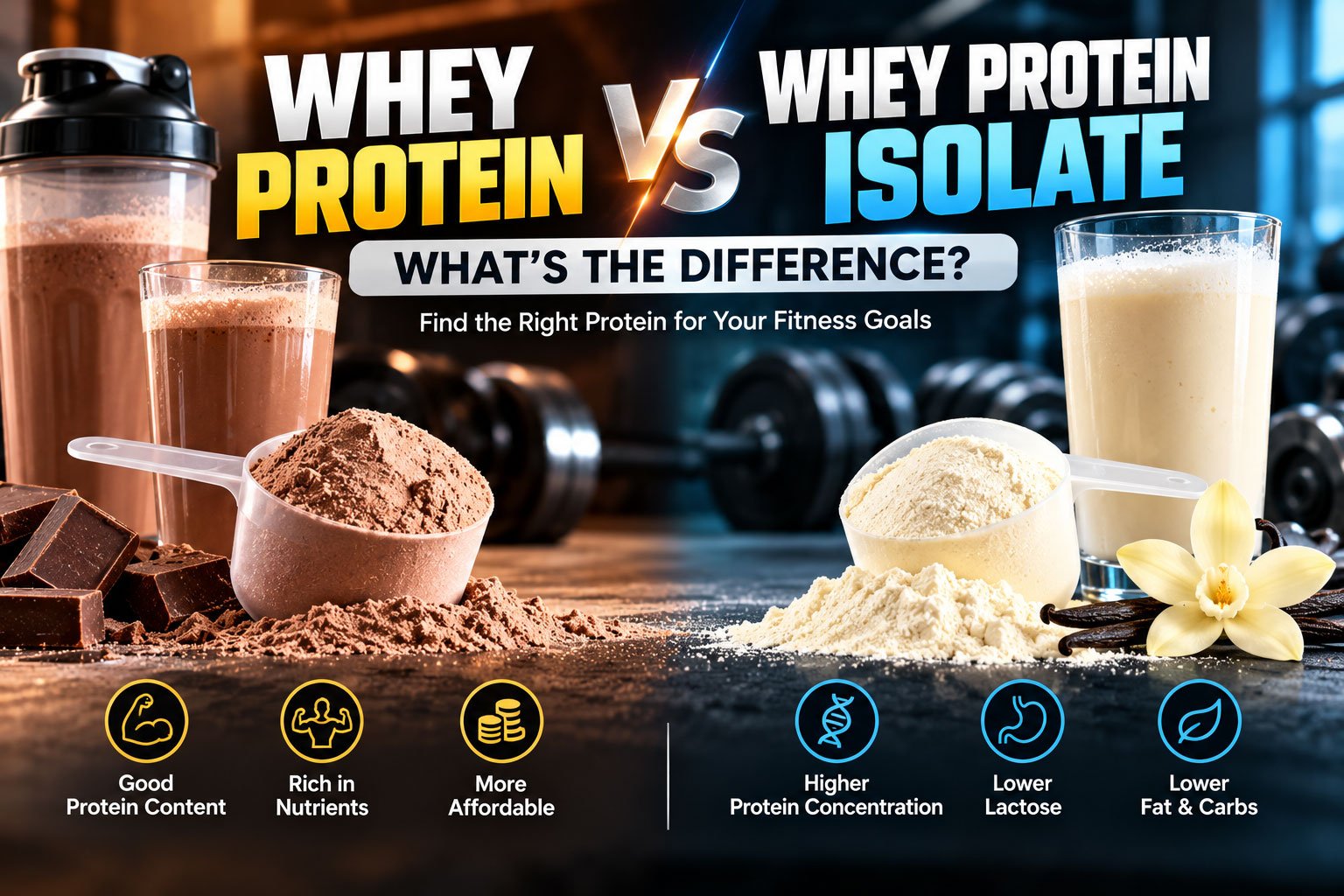
Whey Protein vs. Whey Protein Isolate: What’s the Difference?
- By admin
- 0 Comments
- Posted on
Protein is an essential nutrient that supports muscle repair, growth, and many other functions in the body. For people who exercise regularly, protein powders can offer a convenient way to increase daily protein intake.
Two popular options are whey protein and whey protein isolate. Although both come from milk, they differ in processing, protein concentration, lactose content, and sometimes price.
Understanding these differences can help you choose an option that fits your nutritional needs and budget.
What Is Whey Protein?
Whey is a protein obtained during the production of cheese and other dairy products.
Whey protein powder is commonly used by athletes, gym enthusiasts, and people who want a convenient source of dietary protein.
Depending on the product, whey protein concentrate generally contains approximately 70–80% protein by weight, although some products have different concentrations.
The remaining composition may include varying amounts of carbohydrates, fats, lactose, and moisture.
2. What Is Whey Protein Isolate?
Whey protein isolate undergoes additional processing to remove more non-protein components.
As a result, it generally contains at least 90% protein by weight, although you should always check the product label for the exact composition.
Compared with many whey concentrates, isolates usually contain less lactose, fat, and carbohydrates.
However, the exact amounts vary between products, and whey protein isolate is not necessarily completely lactose-free.
Benefits of Whey Protein Isolate
- Typically provides a higher protein concentration per gram.
- Usually contains less lactose than whey concentrate.
- Generally contains less fat and fewer carbohydrates.
- Can be useful when you want to increase protein intake while limiting additional calories.
People with milk protein allergies should avoid whey protein isolate unless a qualified healthcare professional advises otherwise. Lower lactose content does not make it safe for someone with a milk protein allergy.
3. Which Is Better for Muscle Growth?
Both whey protein concentrate and whey protein isolate can support muscle growth when they help you meet your daily protein requirements.
The body uses amino acids from dietary protein to build and repair tissues. Resistance training provides the stimulus for muscle adaptation, while adequate nutrition and recovery support the process.
You do not automatically build more muscle simply by choosing whey protein isolate over whey concentrate.
Your overall protein intake, training consistency, calorie intake, and sleep are important factors.
4. Which Is Better for Weight Management?
Both products can fit into a balanced diet.
Whey protein isolate often contains fewer calories per gram of protein because it generally contains less fat and carbohydrate.
However, the difference depends on the products being compared.
If you are managing your calorie intake, compare:
- Calories per serving.
- Protein per serving.
- Added sugar.
- Fat and carbohydrate content.
- Serving size.
Remember that no protein powder independently causes fat loss. Sustainable weight management depends on your overall diet, physical activity, and lifestyle.
5. Which Is Better for People with Lactose Sensitivity?
Some people experience digestive discomfort after consuming lactose-containing dairy products.
Because whey protein isolate generally contains less lactose than whey concentrate, it may be better tolerated by some people with lactose sensitivity.
However, lactose levels vary, and even isolate products may contain some lactose.
If you have persistent digestive symptoms, consider speaking with a qualified healthcare professional about suitable alternatives.
Plant-based protein powders may be another option for people who cannot tolerate dairy products
Easy to setup (if you follow the doc) and awesome design !
Mobile version is really good !